In Conversation with Zhang Miao, Chief Producer of Green Wave
Green Wave, a realistic drama centered on a father and son drifting in Beijing, claimed the “Golden Romduol Award” for Best Feature Film in the main competition of the 3rd Cambodia Asian Film Festival. Behind this accolade lies not only the directors keen eye for the subtleties of everyday life, but also the meticulous oversight of the project from its earliest conception to theatrical release by its executive producer, Zhang Miao—the mastermind who steered the film to fruition.
A seasoned producer and distributor behind multiple blockbuster hits, his core strength lies not merely in script selection, but in proactively discovering promising emerging filmmakers. Long before the script of Green Wave was finalized, he resolved to collaborate with Director Xu Lei, drawn to the filmmaker's distinct artistic style and sincere mission to chronicle the lives of ordinary people. In this exclusive interview, we sit down with Executive Producer Zhang Miao to unpack the full lifecycle of Green Wave—from project incubation to production—gain his profound insights into the current landscape of China's film industry, and absorb his invaluable advice for young aspiring producers today.”
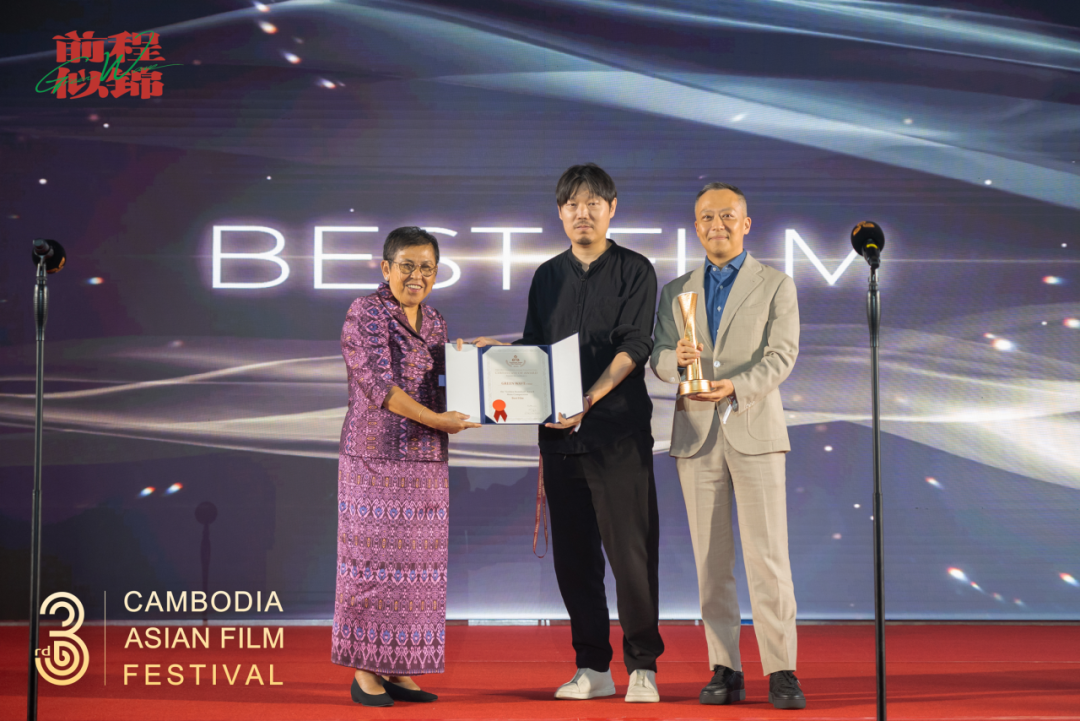
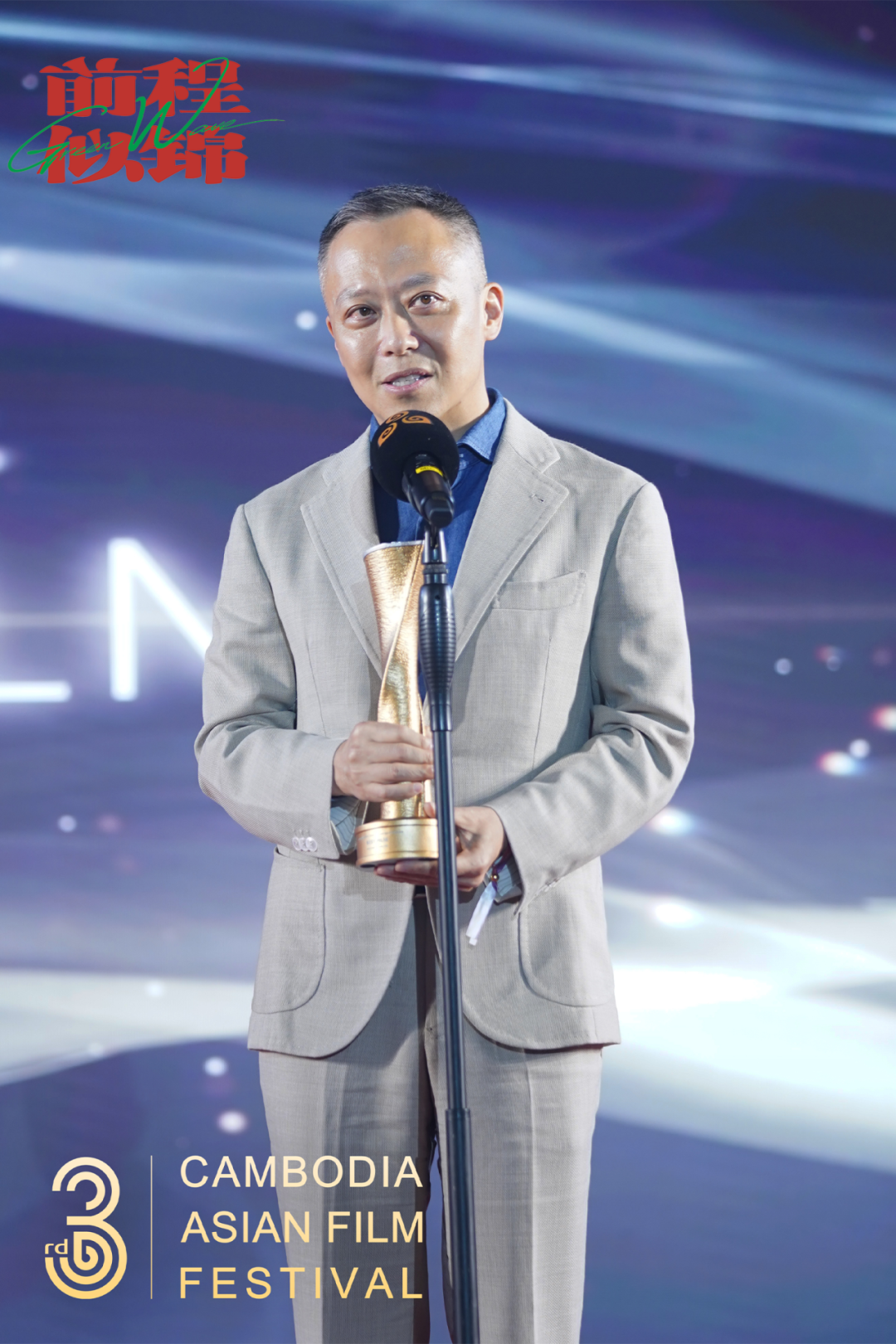
Zhang Miao
Film Producer, Supervisor & Presenter Founder, General Manager & Producer of Wonderful Time Media (Beijing) Co., Ltd. Chief Content Officer of Baina Qiancheng Pictures Co., Ltd.
He has served as presenter and distributor for numerous landmark Chinese films, including Wolf Warrior 2, Hi, Mom, The Wandering Earth, My People, My Homeland, Dying to Survive, and the I Am What I Am franchise.
Q1:
Mr. Zhang, as a veteran producer with an exceptional eye for projects, your film Green Wave took home the “Golden Romduol Award” for Best Feature Film in the main competition of the Cambodia Asian Film Festival. What qualities within the script initially captivated you and convinced you to back this production? In your view, what is the film's core artistic value?
Mr. Zhang Miao:
“First, I'd like to clear up a common misunderstanding about how I evaluate projects: I do not start assessing a story only once a script is finished. My judgment and decision to collaborate on Green Wave came far earlier than the scripting phase. What first drew me in was Xu Lei's remarkable artistic sensibility and unique directorial voice—that was the primary reason I wanted to partner with him again on a feature film.
Second, Xu Lei and I share an aligned creative vision. We wanted to use his signature cinematic language to craft an unadorned story capturing the struggles of young people in megacities like Beijing, navigating family bonds and career setbacks. At that stage, we paid no mind to market appeal, viral gimmicks or trending topics. Our sole priority was whether the story grew organically from real life and could resonate deeply with audiences—and that genuine creative drive struck a chord with me.
As for the film's core value, I believe it boils down to ordinariness and sincerity. It is no sweeping, dramatic tale of heroic triumph or rags-to-riches glory. It neither glorifies larger-than-life heroes nor patronizes small-town common folk. Instead, it adopts a gentle, level perspective to follow Wei Fei, a young literary worker based in Beijing, and his father Lao Wei, who lives apart from his son and travels to the capital carrying a precious family heirloom. The two men, father and son, rebuild their lives side-by-side in a cramped rental apartment. As the father tries to sell the heirloom to support his son, and the son chases his career dreams, they gradually break down their estrangement and learn to truly understand one another.
This intimate narrative brims with authentic, heartfelt emotion. Though beaten down by career hurdles, harsh living conditions and relentless pressure, Wei Fei remains a young man clinging to his aspirations, striving to live an honest, fulfilling life. Lao Wei embodies the archetypal Chinese father: determined to sell his family treasure to ease his son's burdens, offering quiet material support—the epitome of paternal love in China. This unvarnished portrayal of ordinary humanity renders every character vivid and believable, stirring universal shared emotions. Superficially, it is a story about Beijing drifters and father-son kinship, yet its core explores the universal tension between dreams and reality, and the quiet, unspoken understanding that evolves within family bonds. This shared human experience transcends geographic borders and generational divides—and that is its greatest enduring value.”
Q2:
Green Wave explores universal themes of Beijing drifters and intergenerational father-son dynamics through a bittersweet, humorous lens. How do you see the unique emotional power of this “laughter through tears” narrative style in connecting with audiences?
Mr. Zhang Miao:
“The gentle wit and tonal balance of this film were major draws for me to partner with Director Xu Lei. Its humor is neither stark black comedy, nor the broad slapstick of Mahua FunAge blockbusters, nor absurd nonsense. Strictly speaking, it stems purely from Xu Le's innate gift for observational comedy—a tone I describe as “soft melancholy humor”, evoking quiet, knowing smiles rather than loud guffaws. The film does not wallow in societal anxiety, nor does it shy away from life's hardships. It depicts the mingled joys and sorrows of everyday existence with quiet warmth, avoiding over-the-top farce or crushing despair, and invites genuine, heartfelt laughter rooted in real life. This tonal exploration was a core creative objective for me, and this textured brand of humor carries profound penetrating power.
This narrative style boasts two key strengths for emotional storytelling. First, it lowers the emotional barrier for viewers. Themes of youthful disorientation and fractured father-son bonds can easily create emotional distance, yet by grounding these tensions in mundane, relatable daily moments, the film makes audiences feel as though they are watching the lives of friends, acquaintances, or even their own selves—forging powerful immersion.
Second, it infuses universal themes with warmth. The film avoids rigid, formulaic storytelling, unfolding countless small, intimate details at a measured pace. Many quiet shots and understated scenes carry Xu Lei's signature subtle wit and charm. Viewers sitting in a cinema can fully absorb the film's tender warmth, enabling its emotional core to resonate across cultural boundaries. This distinctive blend of gentle humor and restrained storytelling is also one of Director Xu Lei's greatest creative strengths.”
Q3:
The title Green Wave itself carries rich real-world subtext. As the executive producer, how do you view films that center ordinary people and urban transformation functioning as “social archives” or “footnotes of an era”? Specifically, when productions address real-world issues including urbanization and demographic shifts, how should creators strike a balance between artistic merit and social responsibility?
Mr. Zhang Miao:
“First, let me outline my core philosophy for filmmaking, especially for this project. Cinema is a fusion of entertainment and artistic expression: it must deliver enjoyable viewing experiences while fulfilling the cultural and artistic obligations inherent to media art. The entertainment value of Green Wave lies in its sincere, unpretentious storytelling that brings joy to audiences; its artistic merit resides in its power as a historical record of our times. Decades or centuries from now, anyone seeking to understand young urban Chinese people's perseverance amid dreams, the struggles and small joys of ordinary working lives, and the unique dynamics of contemporary Chinese father-son relationships will find this film an invaluable document—that is its timeless artistic significance as a time capsule. Beyond Xu Lei's direction, the authentic performances of the two lead actors, Wang Chuanjun and Xu Lei's real-life father (who plays Lao Wei), are pivotal to grounding the film's honest portrait of young urban strivers and modern familial relationships, lending unmatched authenticity and warmth to the story.
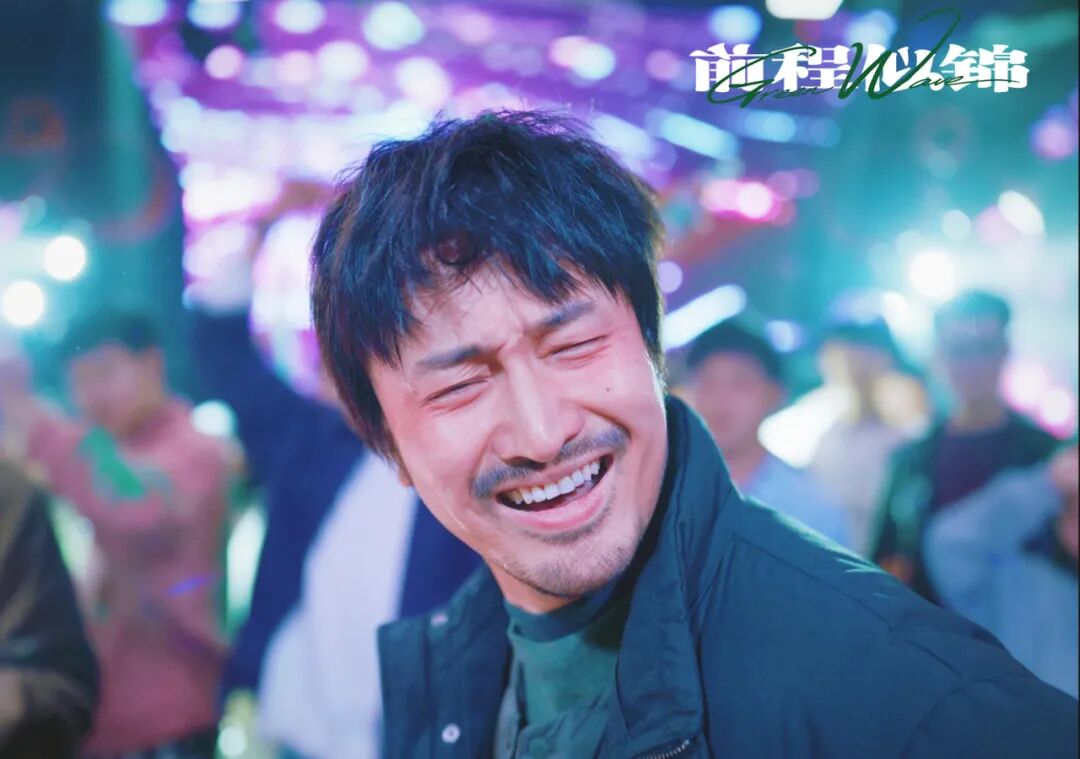
As for balancing artistic value and social responsibility, the core principle is telling authentic stories through a purely cinematic medium. This film does not construct its narrative around viral hot topics or market trends; instead, it uses a distinctly cinematic language to depict emotions and familial dynamics uniquely suited to the silver screen. Amid today's fragmented entertainment landscape, this is a story crafted exclusively for theatrical viewing. Its double wins for Best Feature Film and Best Screenplay at the Cambodia Asian Film Festival, alongside accolades at Pingyao International Film Festival, stand as pre-release validation of its exceptional craft—a thoughtful, aesthetically conscientious work of cinema.
I'd also like to unpack the layered meaning behind the title Green Wave. On the surface, it evokes hopeful visions of a bright future. Yet within our current social context, audiences may read a secondary wordplay: swapping the character “qian” (future) for its homophone “qian” (money), and “jin” (brocade, prosperity) for “jin” (tight), forming a phrase meaning “tight financial prospects”—a wry reflection on widespread financial pressure and shrinking incomes felt by many today. Fundamentally, the film poses a central question: how ought we to approach ordinary lives amid such challenging times?
I believe our perspective on the world is largely shaped by our inner mindset and our attitude toward ourselves and our era. Difficulty always conceals hidden opportunities and new possibilities, and that is the deeper subtext woven into the title Green Wave. If we fixate solely on financial strain and economic headwinds, we risk misinterpreting the phrase as a statement of constricted futures—but that is far from the truth. The film explores where hope and breakthroughs lie amid hardship and ordinariness, and offers its own quiet answer to this question.”
Q4:
As the executive producer of Green Wave, what was the greatest challenge you faced throughout production, and how did you overcome it? Could you share any memorable behind-the-scenes anecdotes?
Mr. Zhang Miao:
“We rarely dwell on hardships publicly, because challenges are an inherent, even rewarding, part of filmmaking. Creating a film means bringing a concept from nothing to a fully realized visual work, a process rife with uncertainty. So long as your foundational creative vision is solid, you can take steady, deliberate steps toward a satisfying final result—whether that outcome is a career-defining triumph or a modest achievement. The entire journey itself is the essence of the film industry.
The biggest hurdle we overcame was completing every stage of development and principal photography amid pandemic restrictions. The city of Beijing, a place brimming with warmth, offered tremendous support and accommodations for artistic creation and film production during that difficult period. In this sense, the very existence of Green Wave serves as a collective response from our generation of filmmakers to the question: how ought we to face our current era? Every member of the creative team remained mindful that we are all ordinary laborers within the film industry. This work is neither a tale of underdogs nor larger-than-life heroes; its true value lies in its honest meditation on how every average person navigates life's ups and downs. This is precisely what lends the film its unpolished, genuine texture and heartfelt emotional core.
If I had to name our single greatest obstacle, it would be navigating full development and shooting during pandemic-era restrictions. Our greatest reward, in turn, is the intimate, truthful story we refined under those extraordinary circumstances. When audiences watch the finished film, they will feel its quiet sincerity and calm, free from empty grandeur—rooted entirely in authenticity. When challenges were at their peak, there was only one solution for the entire crew: to approach every single task with complete honesty and wholehearted dedication.”
Q5:
You have produced landmark hits spanning diverse genres including Wolf Warrior 2, The Wandering Earth and Hi, Mom. In your view, what new trends have emerged in content creation and audience taste within China's current film market? What is the key to crafting a project that earns both critical acclaim and commercial success?
Mr. Zhang Miao:
“The core emerging trend is a profound shift in audience perspective. Over my 25 years in the industry, I have never witnessed such rapid evolution in how viewers engage with film. A decade ago, global and Chinese audiences gravitated toward larger-than-life heroes and superhero narratives, mirroring the rapid economic and cultural expansion of that era—a subconscious desire shared by most viewers at the time.
Later, audiences grew drawn to rags-to-riches underdog stories; mature viewers preferred to look back on their own growth from a gentle, reflective distance, spawning a wave of celebrated small-character dramas. Today, audiences seek a level, equal viewing experience. They crave relatable, accessible characters they can recognize and understand, rejecting narratives that force them to either idolize distant heroes or pity marginalized figures. This level playing field lowers the emotional threshold for engagement, allowing viewers to see fragments of their own lives on screen and connect with characters as equals.
As for the two critical pillars of a film that wins both critics and audiences: First, uphold rigorous cinematic aesthetic and technical standards. All universally acclaimed, commercially successful films share non-negotiable baseline craftsmanship in visual design, sound, editing and every core artistic and technical element of filmmaking—these fundamentals can never be overlooked. Second, communicate with audiences through a level, conversational lens. Do not position viewers as passive spectators; invite them to believe in, follow, and emotionally invest in your story. The foundation of this connection is simple: craft a compelling, authentic narrative.”
Q6:
As an accomplished, vastly experienced producer, what concrete advice would you offer young filmmakers who dream of building careers as producers?
Mr. Zhang Miao:
“The fundamental role of a producer is to bear ultimate responsibility for the complete lifecycle of a film: from the very spark of an initial creative concept to the final distribution of its revenue. Most films begin not with a finished script, but with a simple idea—a conviction that certain characters and stories deserve to be told on screen, launching a long production journey. “From concept to the last dollar” encapsulates the full lifecycle: ensuring all revenue generated by the finished film circulates back to your team and every collaborating partner, completing the project's commercial cycle while fulfilling every duty of a creative product manager.
To frame it through division of labor: the film's core creative crew are master engineers, while the producer acts as the product manager. A successful film is always the joint achievement of engineers and product managers, each advancing the project from their respective expertise across the entire creative and commercial lifecycle. Even to this day, I constantly challenge myself to ask: am I still worthy of the title “producer”? This demands lifelong dedication; even a moment of complacency can leave you falling short of the role's standards.
Young aspiring producers must continuously reflect and improve themselves around three core foundational pillars. The first pillar is consistent upgrading of professional expertise. Cinema keeps evolving with the times and calls for sustained cooperation with elite creators and state-of-the-art technologies. Despite being an art form with a history of more than a hundred years, this narrative medium requires constantly updated, modern content and expressive methods, which makes lifelong professional learning an absolute necessity. As a product manager of film projects, producers do not have to possess the same level of specialized expertise as directors, cinematographers, VFX supervisors, sound engineers or composers, yet they need to fully grasp the working logic of all these roles. They ought to identify a director’s strengths and shortcomings to offer precise support, master basic knowledge of cinematography, camera equipment and lighting, get familiar with VFX production pipelines, learn the complete audio production process, and understand how composers finish their creations. Every practitioner inevitably has blind spots in knowledge, and such gaps will only widen as technology develops; continuous learning is the sole way to deliver qualified producing work.
The second pillar lies in maintaining accountability and artistic integrity. Professional know-how alone is far from enough — technical competence is merely a necessary yet insufficient prerequisite, and these two precious qualities can never be substituted. Integrity refers to staying faithful to audiences, artistic criteria and every partner on set. Not every film you produce can attain commercial success, but you have to carry out every production procedure with full accountability and integrity. Film serves as an enduring record of a country’s aesthetic standards and the creative conscience of its filmmakers. Taking shortcuts or turning out shoddy works will permanently leave an unflattering mark of irresponsibility and moral deficiency on film reels. Accountability means pouring meticulous attention into every tiny detail, with the fundamental mission of respecting the audience’s time and ticket investment, a mindset that no producer can ever abandon.
The third pillar is holding sincere passion and steadfast belief in cinema. Anyone who does not genuinely love and trust filmmaking should not step into this industry. Film is still the most immersive high-definition audiovisual art form humanity has created. Without recognizing its cultural value and holding heartfelt passion for this medium, one can never grow into an excellent producer. My long-standing guideline is to regard film as art rather than a pure commercial deal. Every movie is created from zero and filled with all kinds of hurdles in technology, capital, human communication and creative creation. Passion cannot guarantee success, yet it sustains creators through all hardships, and numerous breakthroughs and new chances only come to those who choose to persist. I cannot make generalizations about other sectors, but within the film industry, genuine passion and enthusiasm are the only sustainable driving force to move forward.
In my opinion, mastering these three pillars will guarantee you a career as a competent, above-average film producer.”
Notes
Every great cinematic work relies not only on a director’s delicate narrative craft, but also on a producer’s careful creative stewardship and profound insight into the pulse of our times. This film, which captures the quiet struggles of Beijing drifters and the nuanced bonds between Chinese fathers and sons, stands as a vivid footnote documenting contemporary urban life. More than that, it embodies filmmakers’ profound reverence for their craft and enduring, fiery devotion to authentic storytelling.